Equipment
An electric field promotes coalescence of fine water droplets, supporting water and salt removal from the crude.
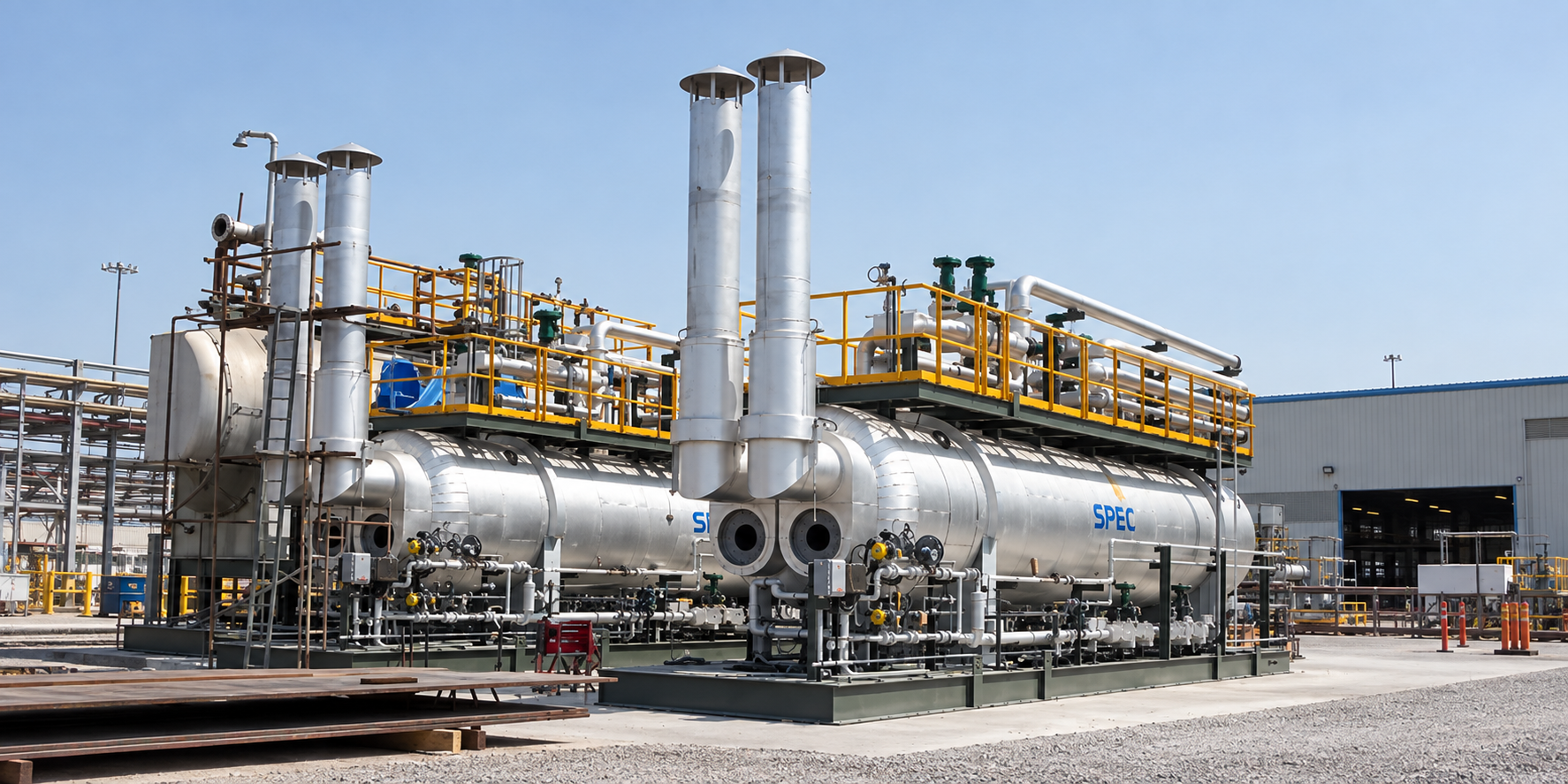
Crude Desalting Equipment for TAQA at Atrush Kurdistan Region of Iraq 2019
ScopeTwo electrostatic dehydrators and two crude cross exchangers for a 50,000 BOPD production facility.
Application
Electrostatic heater treaters are often used in lieu of mechanical treaters. They are selected where the treated oil has to reach a lower BS&W figure or a lower salt content than a mechanical unit can deliver, or where plot space is constrained.
Process
Like mechanical heater treaters, electrostatic units generally have a heating section using gas fired firetubes to provide the heat.
In the coalescing section, however, electric transformers generate an electrostatic grid that enhances coalescence. Fine water droplets are drawn together into larger ones that settle out of the oil. Electrostatic treatment can achieve lower BS&W and salt targets, or reduce plot area, where feed properties and design basis support it.
On desalting duty, fresh wash water is injected and mixed into the crude upstream of the vessel. The salt dissolves into that water, and the grid then coalesces and removes the water — taking the dissolved salt out with it.
System configuration
System configuration varies with process duty, operating conditions and project requirements.
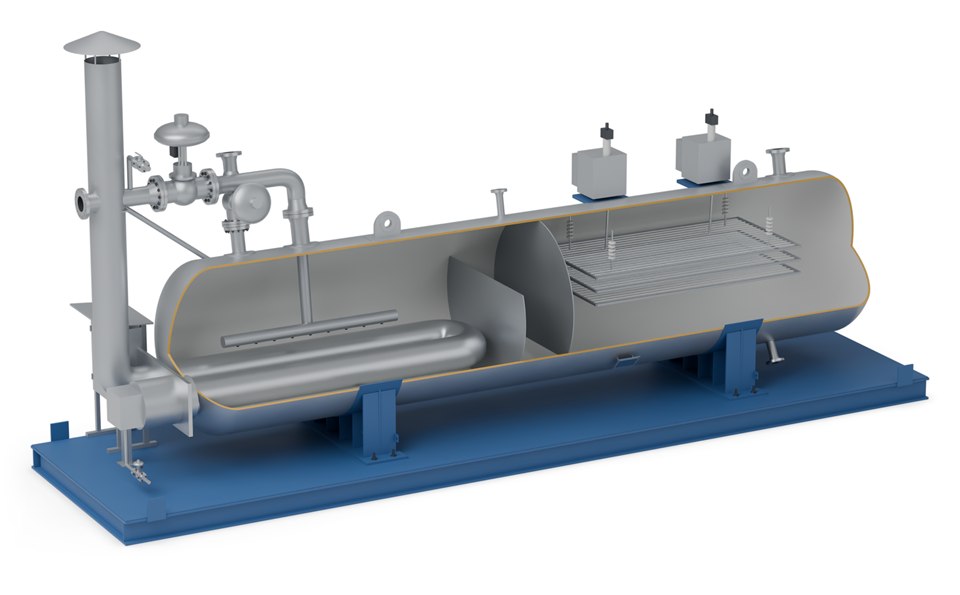
Preheats the incoming emulsion, reducing the load on the firetube and the fuel gas used.
Spins the incoming flow so that free gas leaves upwards and the liquid flows down below the firetube.
Draws free water off below the firetube, so that it is not heated.
Gas-fired firetube, protected by a heat shroud, that brings the emulsion to treating temperature.
The grid polarises the water droplets so that they coalesce and settle out of the crude.
Withdraws water and solids along the full length of the vessel.
Also in the vessel
Options
Final equipment arrangement and delivery format depend on process duty, transport constraints and site requirements.
Specifications
| Aspect | Mechanical | Electrostatic |
|---|---|---|
| Heating section | Firetubes | Gas fired firetubes |
| Coalescing section | Mechanical coalescers | Electrostatic grid generated by electric transformers |
| Footprint | Larger for equivalent duty | Smaller than a comparable mechanical unit |
| Treated oil BS&W | Higher | Lower |
| Salt content | Higher | Lower |
Grid voltage, treating temperature, vessel size and the achievable BS&W and salt figures are set by SPEC engineering against your crude properties and target specification.
Advantages
The applied field reaches droplets a mechanical coalescer would leave in the oil.
Wash water dissolves the salt, and removing that water takes the salt out with it.
Can reduce plot area compared with a mechanical treater of equivalent duty, where the design basis supports it.
Evidence
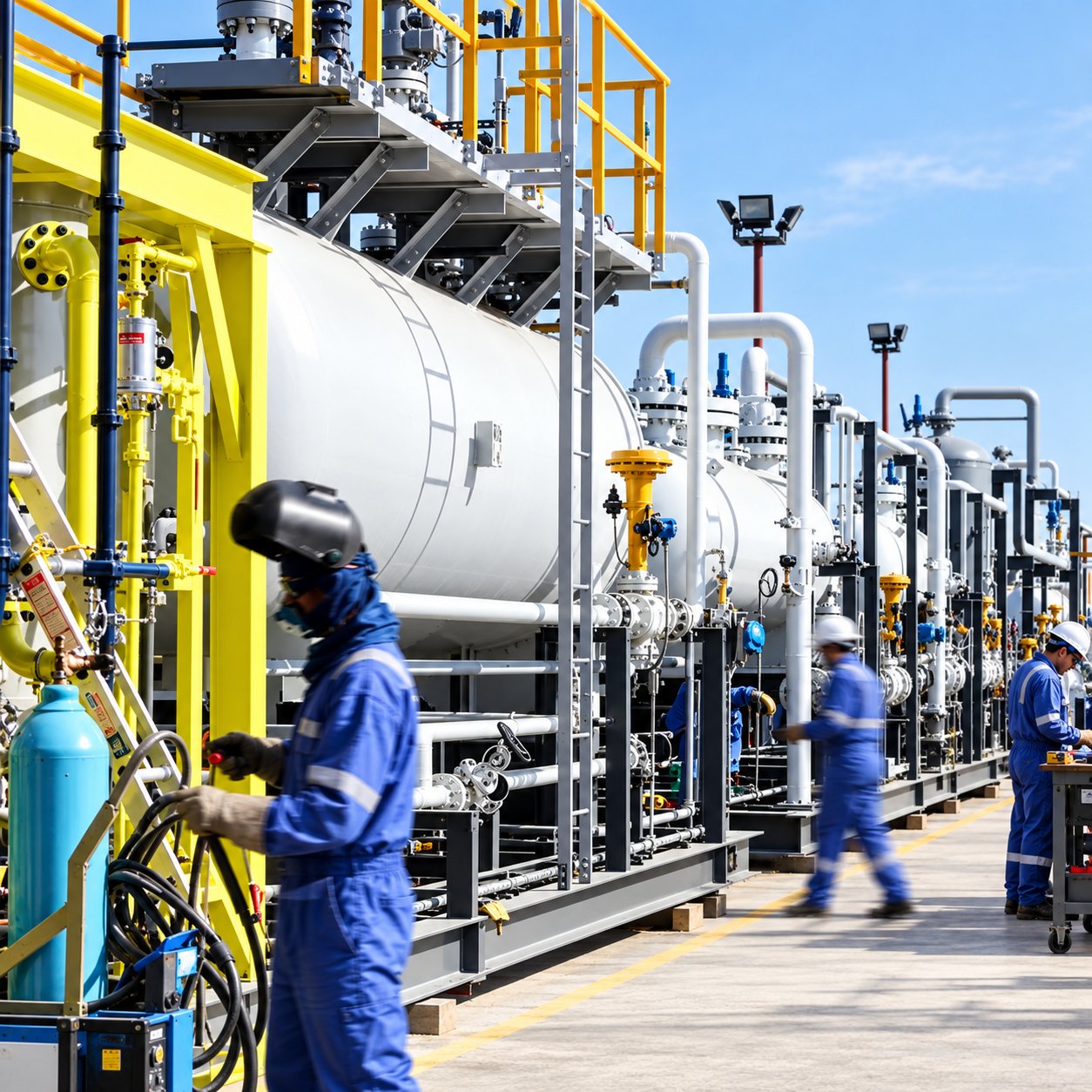
For TAQA's 50,000 BOPD Atrush production facility in the Kurdistan Region of Iraq, SPEC designed, fabricated, tested and supplied the desalting equipment: two electrostatic dehydrators and two crude cross exchangers.
.jpg)
Related
Process data

Enquiries
Send us your process data and operating conditions, and we will review the duty with you.
Contact Us