Equipment
Dissolved air flotation (DAF) units remove oil and suspended solids from water. Air-saturated water is pressurised and introduced into an atmospheric flotation tank; as the pressure equalises the air is released as bubbles that carry the particles to the surface for skimming.
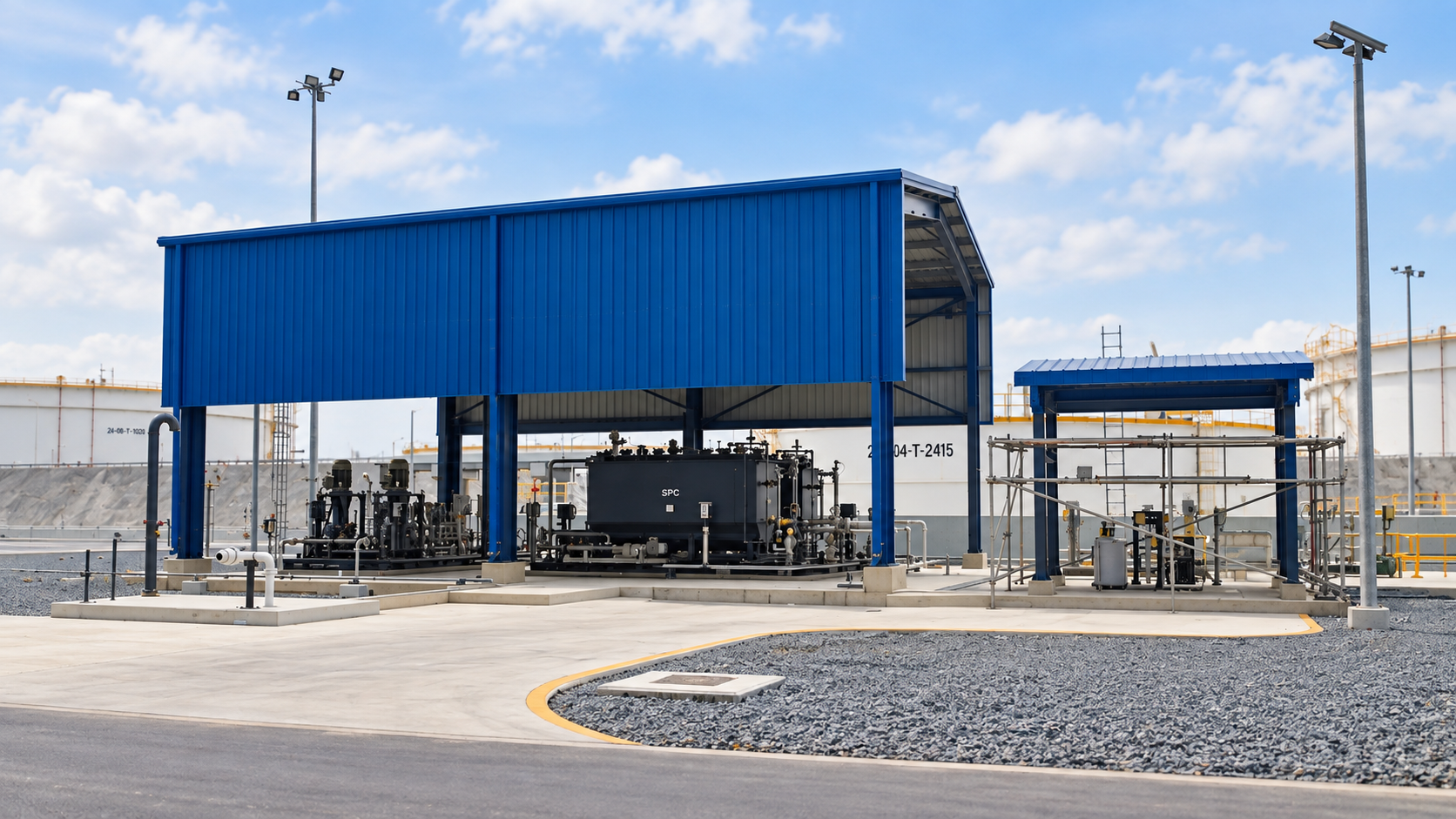
Produced Water System for the Abu Dhabi Crude Pipeline United Arab Emirates 2013
View project →Process
A portion of the treated produced water leaving the DAF tank is recycled and pumped to an air drum, where compressed air is introduced. Enough air is added to ensure the water is saturated.
That air-saturated water is then sent to the front of the flotation tank. On entering the tank, tiny air bubbles are released. The bubbles attach themselves to the particles being removed, causing them to rise to the surface. A skimmer or weir plate segregates the suspended particles from the treated water.
Chemicals are typically injected into the feed water to flocculate the suspended particles. Natural gas may be used instead of air, depending on the application and the location of the facility.
System configuration
System configuration varies with process duty, operating conditions and project requirements.
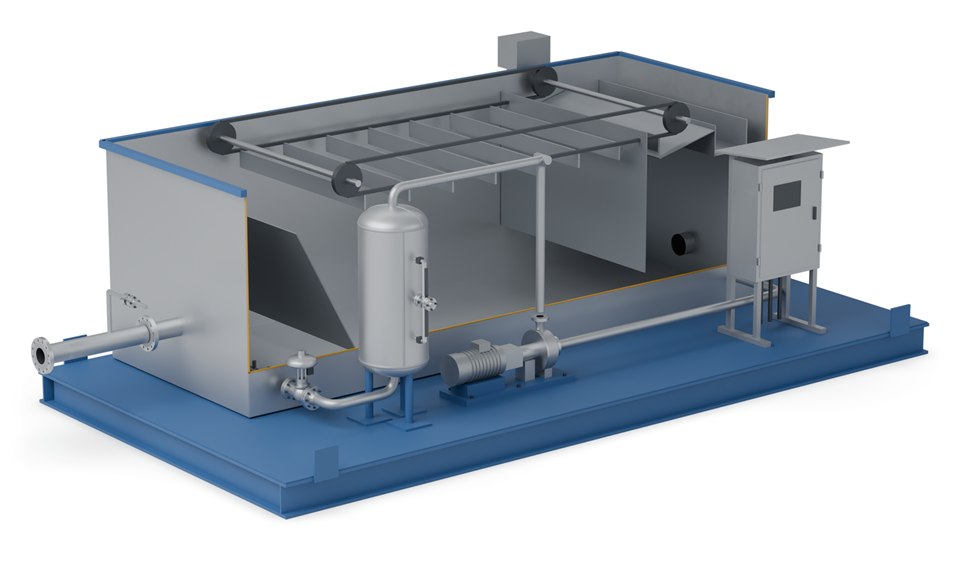
Atmospheric tank where released air bubbles carry oil and suspended solids to the surface.
Pumps part of the treated water back to the air drum.
Where compressed air is added until the recycled water is saturated.
Separates the floated particles from the treated water.
Doses flocculant into the feed to gather the suspended particles.
Options
Final equipment arrangement and delivery format depend on process duty, transport constraints and site requirements.
Specifications
| Parameter | Value |
|---|---|
| Typical removal performance | Up to 90% of dispersed oil and suspended solids, depending on inlet conditions |
| Vessel code | ASME Section VIII for pressure parts |
| Supply | Configured around process requirements, operating conditions and project scope |
| Delivery | Skid-mounted units |
| Flotation gas | Air, or natural gas depending on application and location |
| Chemicals | Minimal chemical usage; flocculant typically injected into the feed |
| Solids handling option | Screw conveyor available for heavy solid removal |
| Operability | Quick start-up and able to handle periodic stoppage |
Removal performance, recycle rate and chemical dosing are set against inlet-water quality and required outlet specification. Performance for a specific project is confirmed in SPEC’s proposal.
Advantages
Typically up to 90% of dispersed oil and suspended solids removed, depending on inlet conditions.
Handles periodic stoppage without a lengthy return to service.
Flocculant dosing kept to what the separation actually requires.
Related
Dispersed gas clarification using eductors rather than saturation.
View →Bulk free oil removal upstream of flotation.
View →Final polishing where discharge limits are tight.
View →Process data

Enquiries
Send us your process data and operating conditions, and we will review the duty with you.
Contact Us